
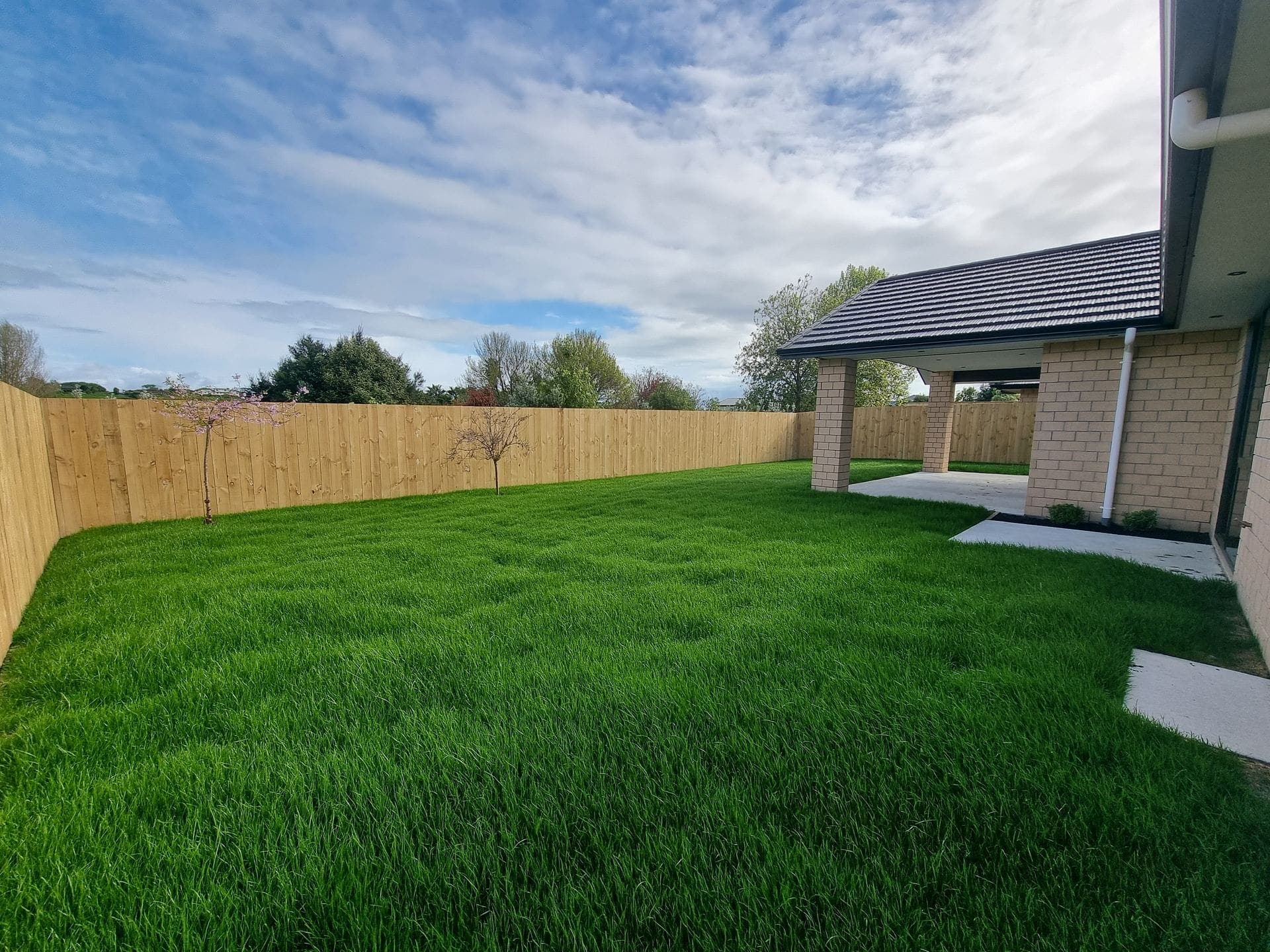
Quick answer: hydroseeding sprays a seed, mulch and fertiliser slurry onto prepped soil and handles slopes well when reinforced. Turf gives an instant, even lawn but costs the most fuss to lay well. Dimple seeding presses seed into rolled dimples with a tractor implement - the practical choice once a lifestyle section gets past about 1,500m². Most Waikato sections suit one clearly, once you know what to check.
We've hydroseeded everything from a 100m² Glenview backyard to full new-build sections, and dimple seeded an 8,000m² lifestyle block in Gordonton in a single week. Real jobs, not stock photos or renderings - that's the difference this whole article is actually about.
Hydroseeding vs turf vs dimple seeding, side by side
No prices below - just what each one actually does, so you can rule two out fast.
| Hydroseeding | Turf | Dimple seeding | |
|---|---|---|---|
| Time to a full lawn | Germinates in 7-14 days, mowable in 4-6 weeks | Green from day one, rooted in 2-3 weeks | Germinates in about 2 weeks in good conditions |
| Day-one look | Bare, slightly green-tinged dirt - it needs a few weeks of patience | Instant, uniform, photo-ready | Tilled dirt with faint dimpled rows - looks like a job site, not a lawn, for a couple of weeks |
| Best for | Awkward or sloped areas, mid-size sections | Small, high-visibility lawns, matching an existing lawn edge | Large, open lifestyle sections - ours starts earning its keep past about 1,500m² |
| Watering, first weeks | Light, 2-3 times a day - it must never dry out | Deeper, 1-2 times a day, tapering over 3-4 weeks | Daily until germinated, then deeper and less often as roots establish |
| Slopes | Handles them well - if reinforced with tackifier, not sprayed and left | Laid across the slope from the bottom, harder to anchor on steep ground | Not the tool for it - the tractor implement needs flat, drivable ground |
| Best Waikato timing | Spring (Sep-Nov) or autumn (Mar-May) | Most months - just expect slower root-strike in winter | Spring or autumn - same germination window as hydroseeding |
How hydroseeding actually works (and why "spray and pray" gives it a bad name)
A hydroseeder is, structurally, a tank on wheels that has given up on fighting fires and taken up gardening instead. It holds a slurry of grass seed, wood-fibre mulch, starter fertiliser and water, kept moving so nothing settles.
- Soil gets tested and prepped - pH ideally 6.0 to 7.5.
- The slurry (seed, mulch, starter fertiliser, water, tackifier on slopes) goes into the tank.
- It's sprayed on in overlapping passes via hose or cannon - roughly an hour or two per acre.
- Light watering, 2 to 3 times a day, for the first week or two - it must never dry out.
- Germination starts within 7 to 14 days.
- 4 to 6 weeks later, it's a proper, mowable lawn.
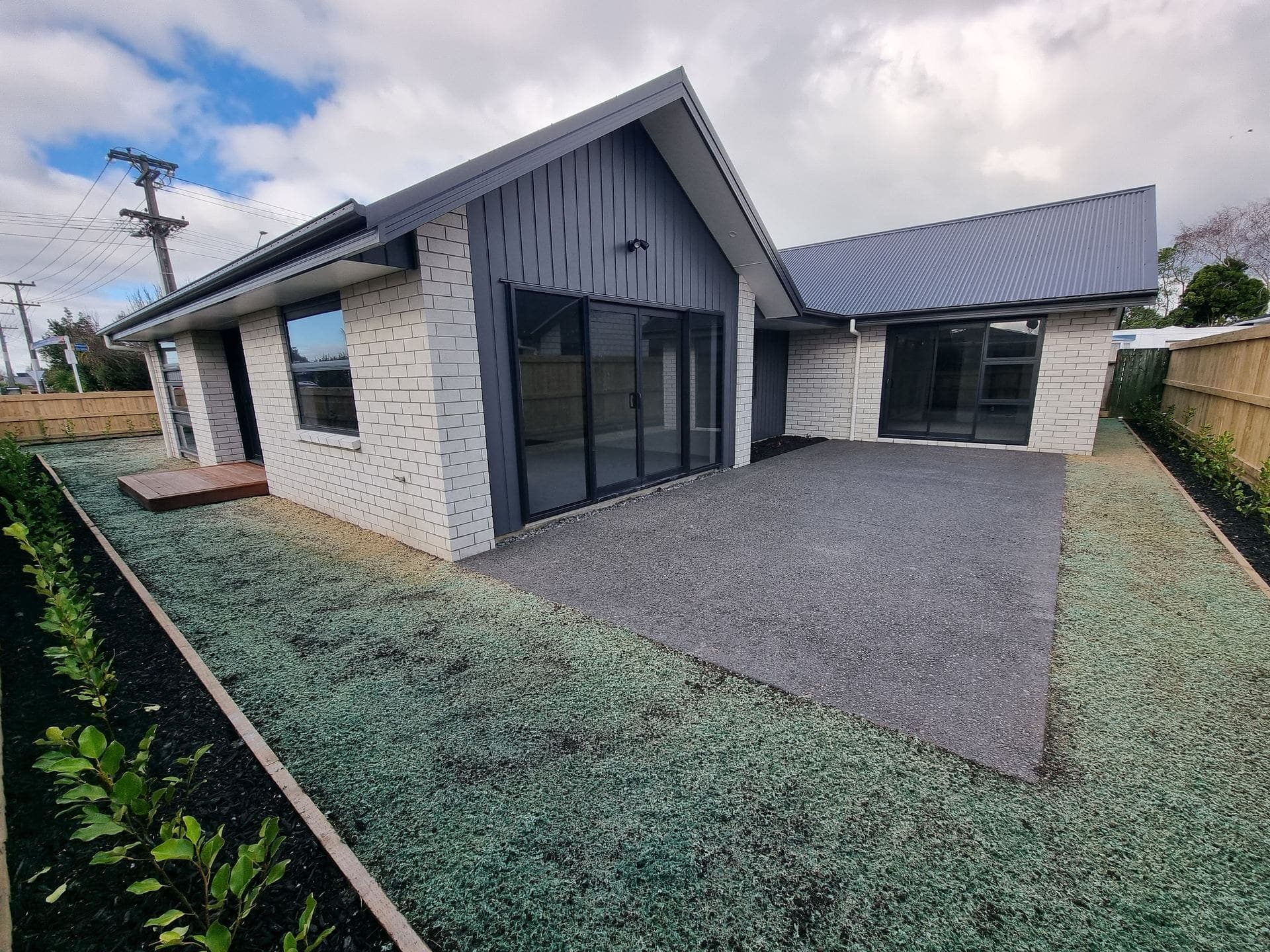
Day one of a hydroseed job - this is the "bare, green-tinged dirt" stage from the table above, a few weeks before it looks like a lawn.
The "spray and pray" reputation comes from the DIY version of this: someone with a rented rig, no tackifier, and a section with even a gentle slope. One good downpour later, the seed is somewhere in the neighbour's gutter and the lawn is still dirt. Done properly, with the right mix and the right reinforcement for the site, that failure mode mostly disappears.
How turf actually works, and why it's not just "grass in a box"
Turf arrives pre-grown on a farm, cut with a thin pad of its own soil, and rolled - which means it turns up already committed to a life of being walked on, several weeks before it's actually earned the right to be.
- The old surface is cleared and an underlay mix goes down.
- Rolls are laid in a brickwork pattern from one edge, pressed firmly for real soil contact.
- On a slope, it's laid across the grade from the bottom, never straight up and down.
- Watering: 1 to 2 soakings a day for the first fortnight, tapering to every few days by week four.
- Roots typically strike into the new soil within about two weeks under good conditions, longer in winter.
- First mow waits until it's properly anchored - usually two to three weeks in.
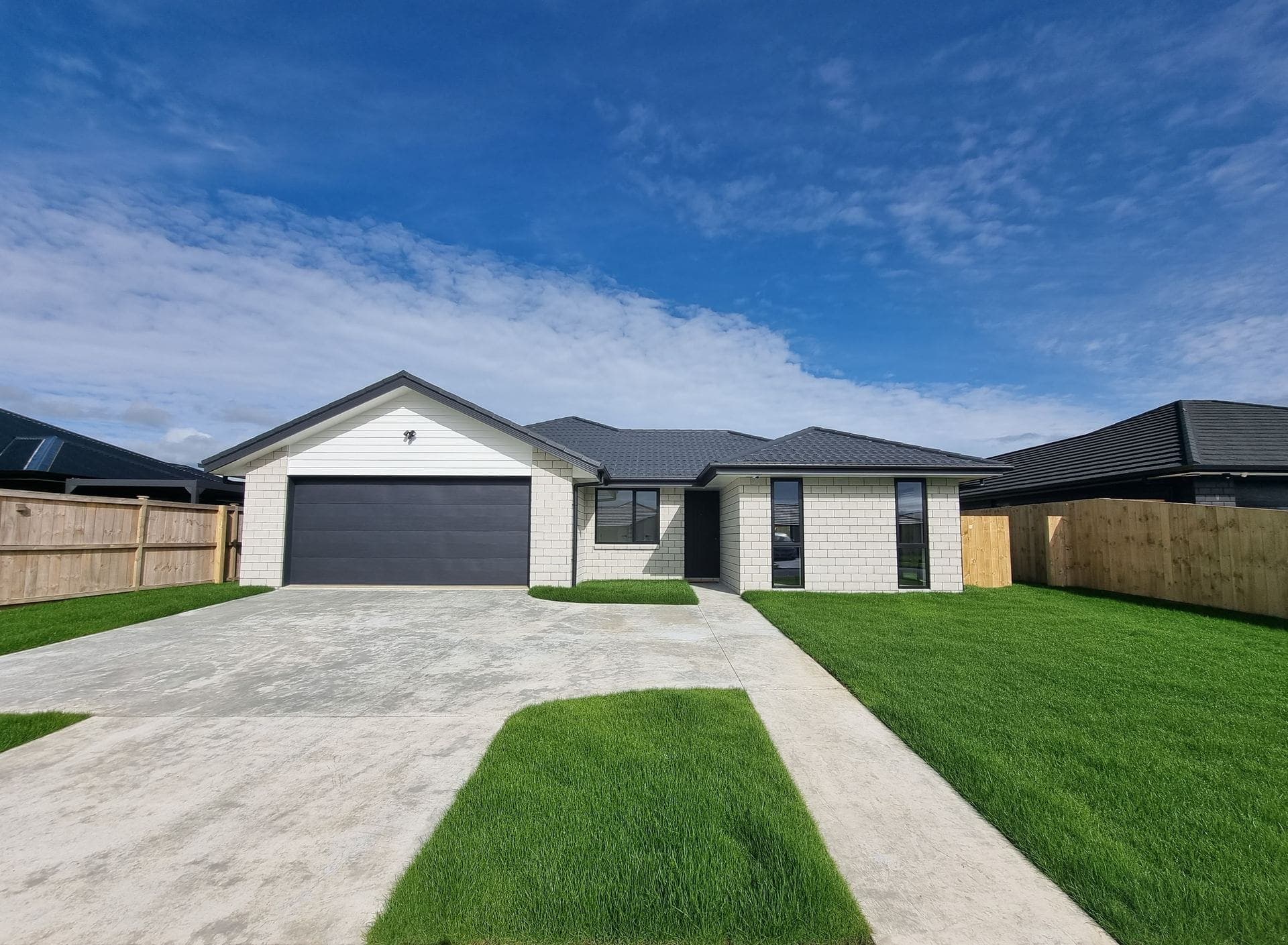
Same new-build job as the hero photo, front yard - even coverage, no bare patches, once it's had time to establish.
How dimple seeding actually works, and why it's the one for big sections
A dimple seeder is a roller towed behind a tractor - it presses shallow dimples into freshly tilled soil and drops seed straight into each one, then a rear brush works it in. Less surface disturbance than a disc or slit seeder, and one machine can cover a paddock-sized section in a single pass, which is the whole point once a lifestyle block stops being "a lawn" and starts being "a landscape."
- The section is cultivated and levelled first - this is most of the actual work.
- The dimple roller passes over the tilled soil, pressing seed into shallow pockets as it goes.
- A following brush covers the seed, protecting it from birds and weather.
- Daily watering until germination, usually around two weeks in good conditions.
- Watering eases off and goes deeper as the root system establishes.
We dimple seeded an 8,000m² lifestyle block in Gordonton in a single week, start to finish. Try that with a hose and a hydroseeder and you'll be there for a fortnight.
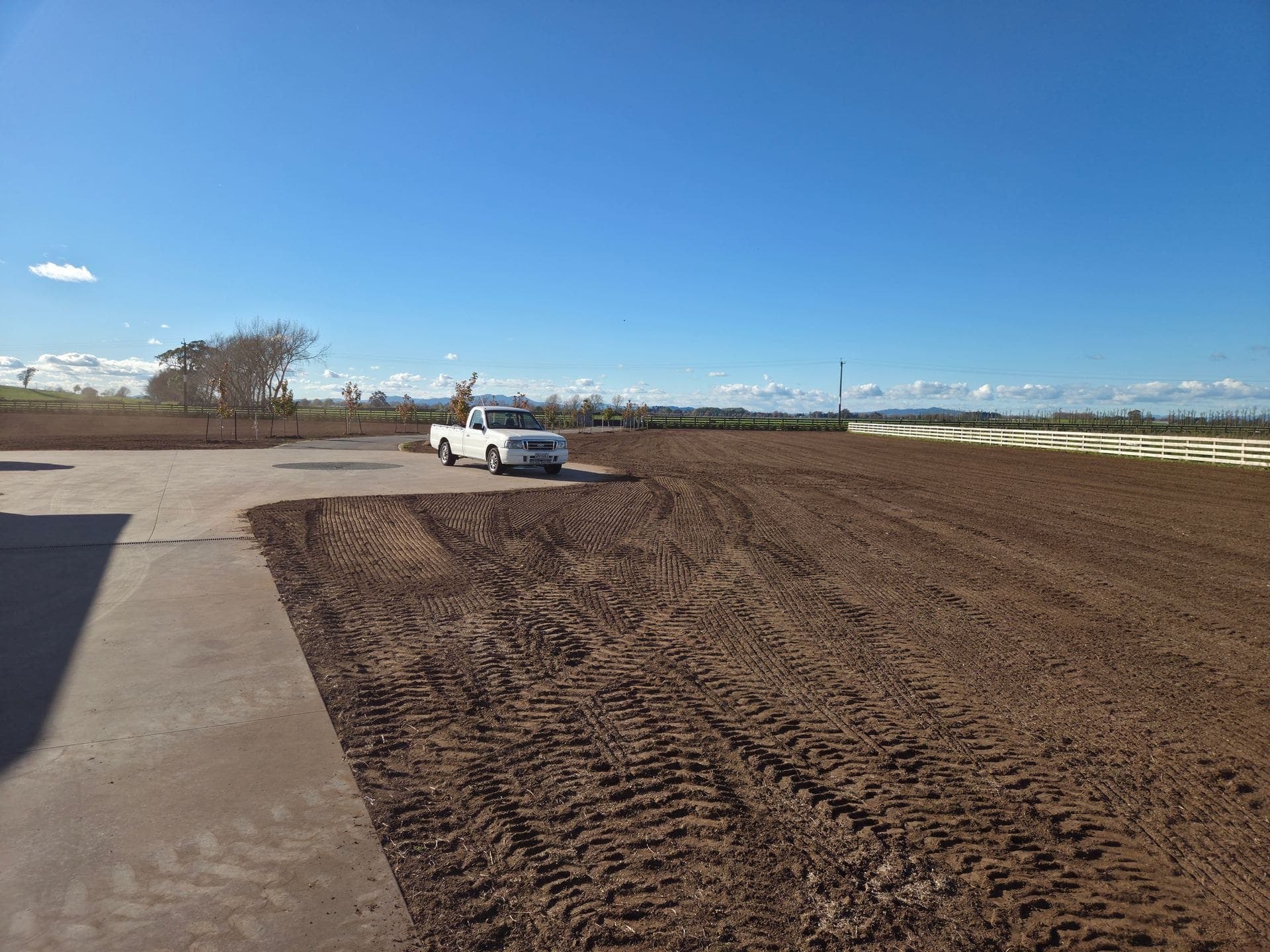
The Gordonton job, mid-pass - the tractor and roller cover ground a hydroseeding hose never could in the same time.
Do hydroseeded lawns really need less water and grow deeper roots?
Almost every hydroseeding company's website makes the same claim: 30 to 40 percent less water than turf, and noticeably deeper roots. I've heard other crews pitch that exact number to customers who'll never check it, and it bugs me every time. We went looking for where it actually came from. We couldn't find it - no study, no trial, just the same figure copied from one landscaping blog to the next until it reads like fact.
"We don't usually see hydroseeding as an option for home lawns," says Alison O'Connor, Professor of Horticulture at Colorado State University Extension - even the experts don't treat this as a settled contest.
What we'll actually stand behind: turf is cut from a farm with barely half an inch of its own root pad, and has to re-root into your soil - often a different type than the one it grew up in. Hydroseeded grass germinates straight into your ground and skips that transition entirely. That's a real mechanism. "Deeper roots" and "40 percent less water" aren't proven, and we'd rather say that than repeat a line because it sounds good in a sales pitch.
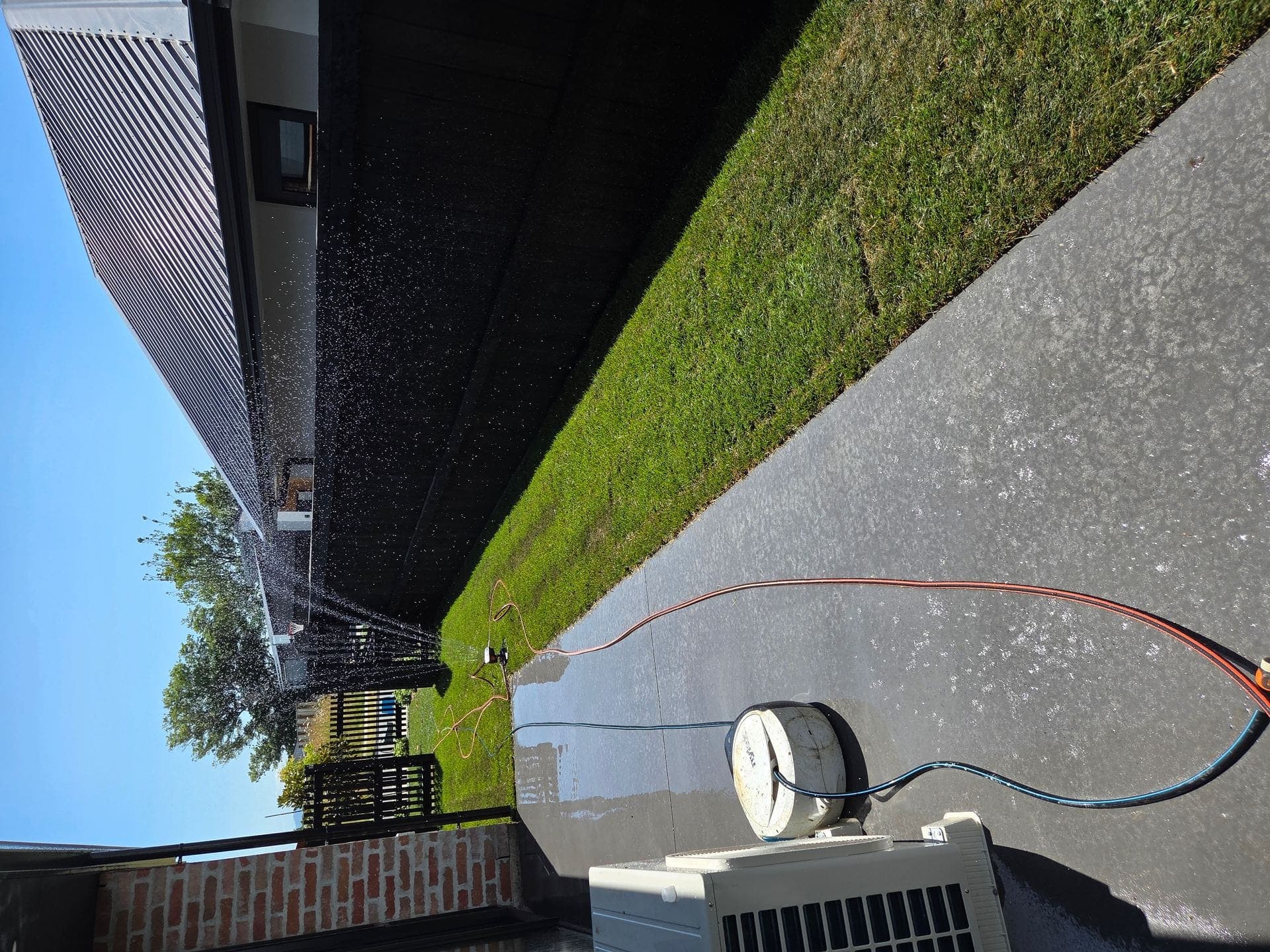
Real watering, mid-job, on the Glenview hydroseed below - not the light misting a spray-and-pray job gets.
Which one actually wins on a slope
Search this and you'll get two confident, opposite answers, delivered with the same total certainty: hydroseeding is bad on slopes because the seed washes away, and hydroseeding is great on slopes because that's literally how highway embankments get grassed. Both are true, depending on one detail almost nobody mentions: reinforcement. Unreinforced slurry on a bare slope behaves exactly the way you'd expect wet dirt to behave on a hill, which is to say it leaves. Add a tackifier or a bonded fibre matrix - the same erosion-control method used on steep civil and highway sites - and hydroseeding becomes the more practical option for a big, awkward, sloped lifestyle-block section, because a machine can spray ground a person can barely stand on without a rope and some regrets.
Turf can go on a slope too, but it has to be laid across the grade from the bottom and pressed or pinned into place, and doing that properly on real Waikato hill country is a two-person, non-optional job, not a Saturday afternoon with a six-pack and unearned confidence. Dimple seeding sits this one out entirely - a tractor towing a roller needs ground it can actually drive on, so save it for the flat and gently rolling parts of the section.
Which one actually suits your section size
This is the question nobody else answers straight, so here it is: under about 1,500m², hydroseeding or turf will almost always make more sense - a dimple seeder is a tractor implement, and dragging one out for a suburban backyard is like calling in a digger to plant a rose bush.
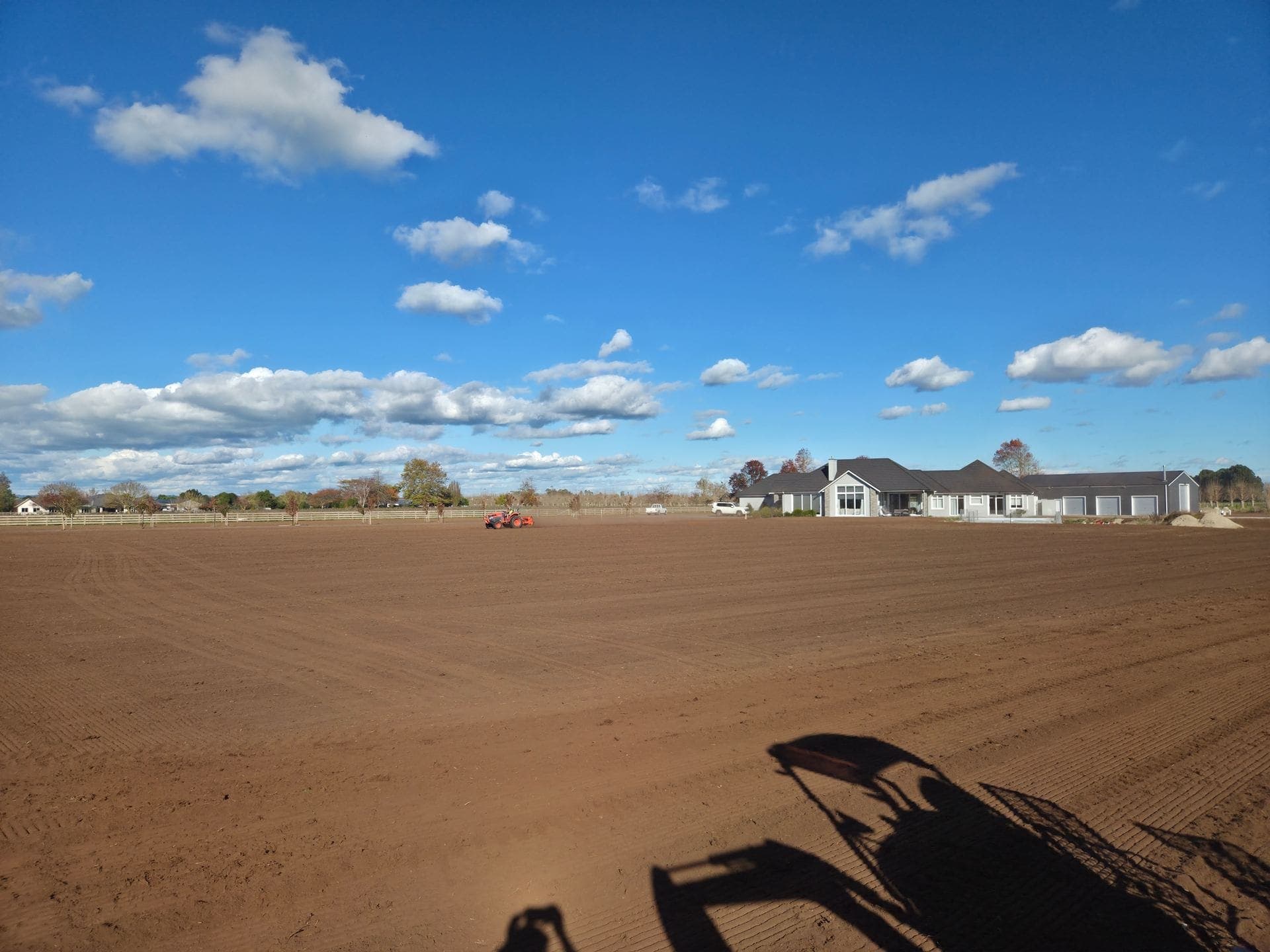
8,000m² in Gordonton, cultivated and ready to go - this is what "past 1,500m²" actually looks like.
Past 1,500m², on open, reasonably flat lifestyle ground, dimple seeding starts winning on sheer coverage speed - the section above is a fair example.
Small, high-visibility lawn that needs to look finished today? Turf. Awkward shape, a slope, or an area a machine can spray but can't easily drive? Hydroseeding.
A big open paddock-to-lawn conversion? That's a dimple seeder's whole reason for existing.
Whichever one fits, it sits under the same job: our lawn installation work covers hydroseeding, instant turf and dimple seeding across the Waikato.
| Season | Hydroseeding | Turf | Dimple seeding |
|---|---|---|---|
| Spring (Sep-Nov) | Ideal - warm soil, reliable rain | Good | Ideal |
| Summer (Dec-Feb) | Workable, needs disciplined watering | Good, watch the water bill | Workable, same watering discipline as hydroseeding |
| Autumn (Mar-May) | Ideal - the other sweet spot | Good | Ideal |
| Winter (Jun-Aug) | Workable - germination stretches past a month | Slower root-strike, still fine | Workable - same slower germination as hydroseeding |
The best time for each method around Hamilton
Spring and autumn are the sweet spots for hydroseeding and dimple seeding alike - warm soil, reliable rain, grass established before it fights summer drought or winter cold. Sow in winter and germination stretches past a month for both, though there's a genuine upside: less weed competition, and the rain waters it for you. Turf is more forgiving of timing since it skips germination, but root-strike still slows down through the cold months.
Hamilton averages around 14°C year-round with rain spread fairly evenly across the seasons - unglamorous, reliable weather that grass actually prefers over drama.
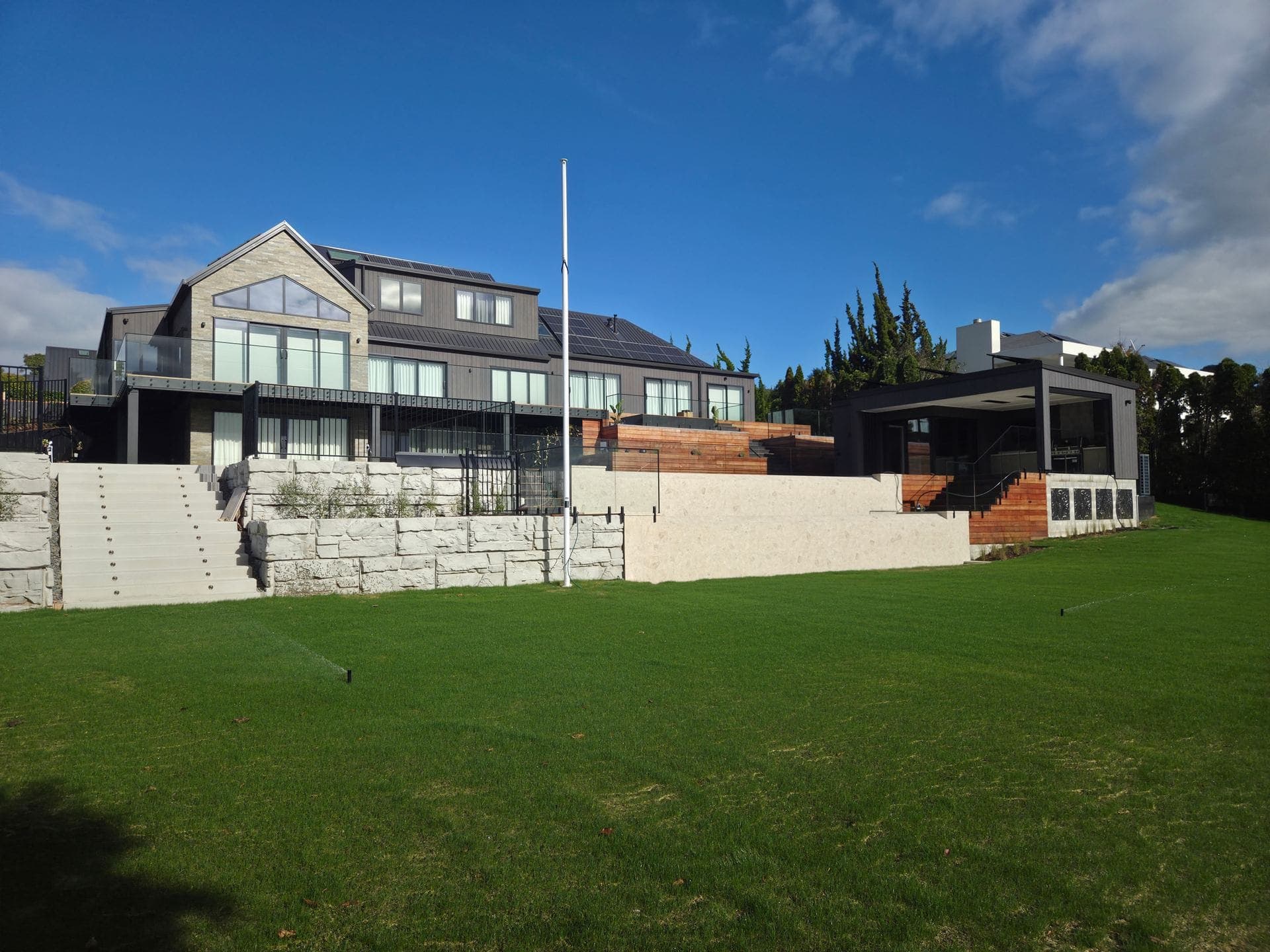
A finished lawn in Pukete - our fencing, garden and lawn work (the retaining wall and terracing were already there).
Grass that actually suits a Waikato section (and the one everyone gets wrong)
Perennial ryegrass is the workhorse for Hamilton lawns - fast, hardwearing, forgiving. Tall fescue goes in where drought tolerance matters more, thanks to a deeper root system, but it needs soil temperatures above 12°C to establish, which in the Waikato usually means a late-summer sowing window. Fine fescue and browntop get blended in for density in shadier or drier corners.
And then there's kikuyu, which shows up on more than one generic New Zealand hydroseeding checklist with no warning attached, like a bouncer who's never checked an ID. It's a warm-season grass that browns off and goes dormant the moment a decent frost turns up - and Hamilton gets plenty of those. Great lawn, wrong region. If a seed mix doesn't mention frost at all, that's worth asking about before anyone sprays anything.
Rough soil check: grab a handful of dirt and try to roll it into a sausage shape. Holds together and stays smooth - clay. Falls apart, gritty - sand. Something in between that crumbles politely - loam, which is most of the Hamilton basin and about as easy as soil gets to work with.
Dimple seeding runs the same ryegrass and fescue mixes as hydroseeding - the seed doesn't know which machine put it there. The kikuyu warning applies exactly as hard either way.
What we actually see on the job
The Glenview job was a typical 100m² backyard - tilled bed, new plantings along the fence, then hydroseeded and watered on the schedule this article describes, not the "spray it and hope" version.
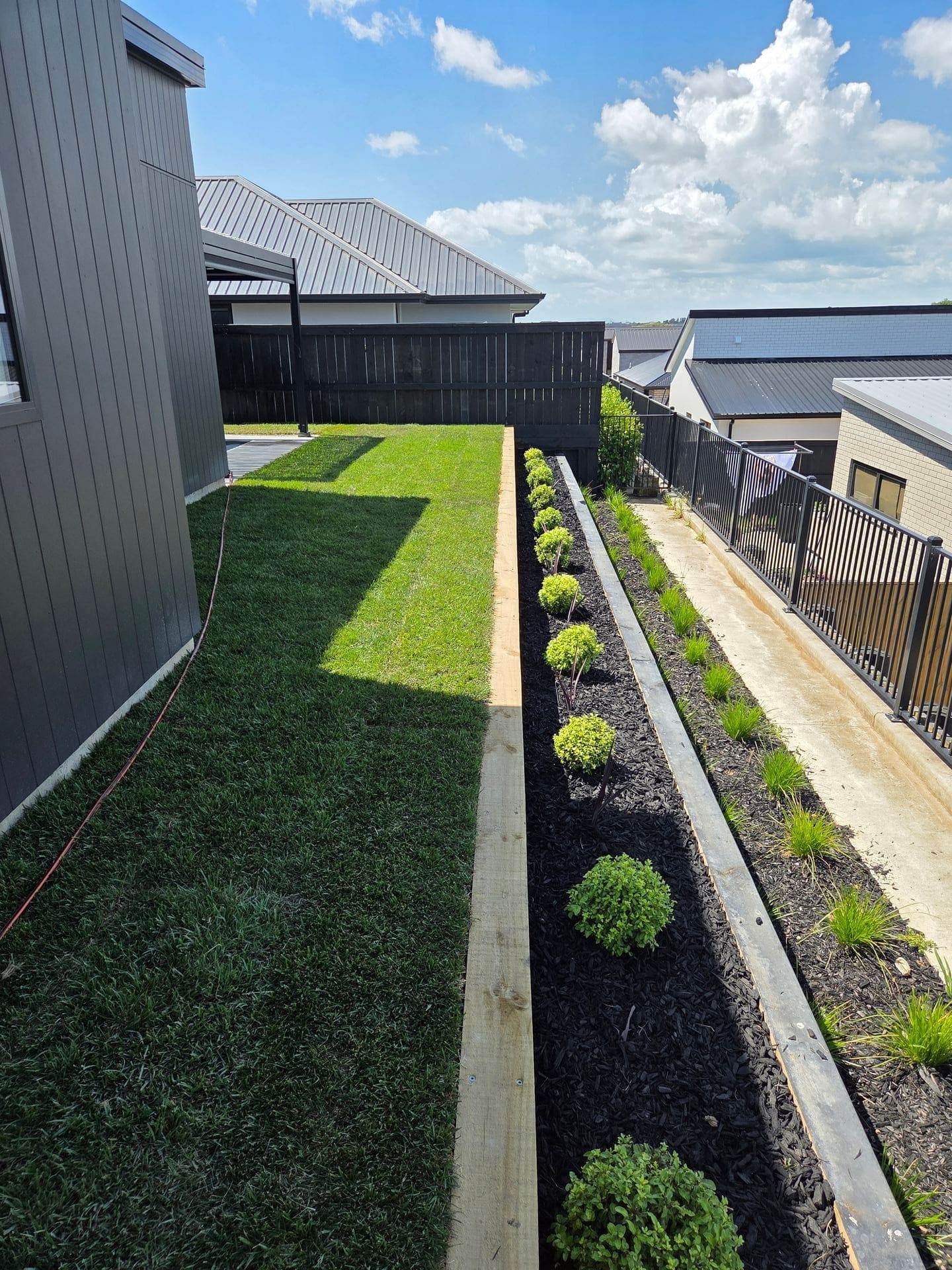
The same Glenview backyard, established - this is what "done properly" looks like a few weeks later.
On a different job, we pulled down a couple of old buildings for a Hamilton-area renovation, cleared truckloads of rubbish, concrete and landfill - the kind of pile that makes you reconsider every decision that led to this exact Tuesday - and levelled the whole section with topsoil so it was ready to hydroseed straight after. That's the part nobody photographs - the boring, unglamorous groundwork that decides whether the grass on top actually takes.
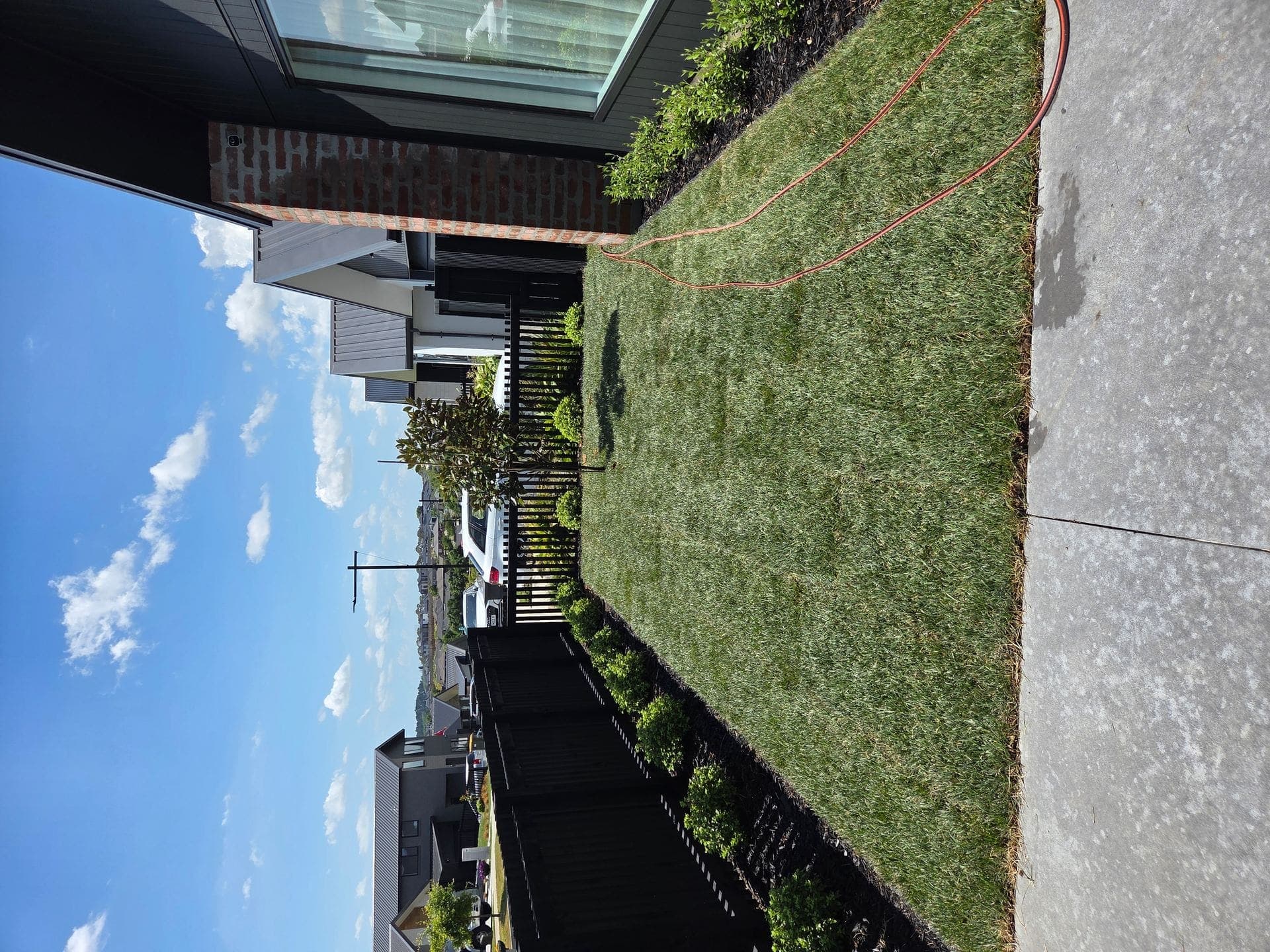
Same Glenview job, closer to the house - even coverage right up to the paving.
FAQ
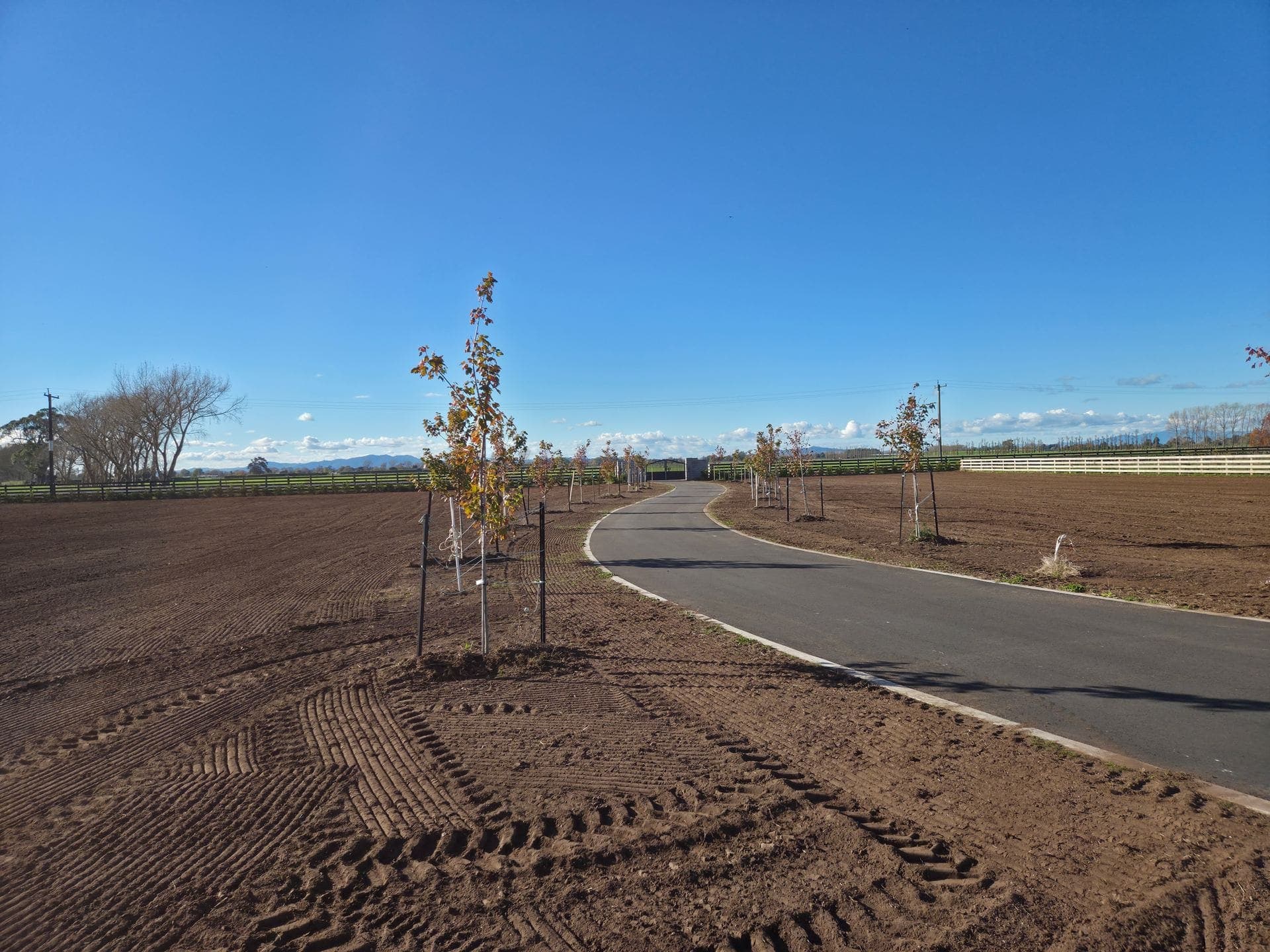
The same Gordonton property, finished - trees planted, section fully seeded behind it.
Not sure which one your section actually needs? See our lawn installation options or get a free, no-obligation quote - we'll measure up and tell you straight, no push toward whichever is easier for us.