
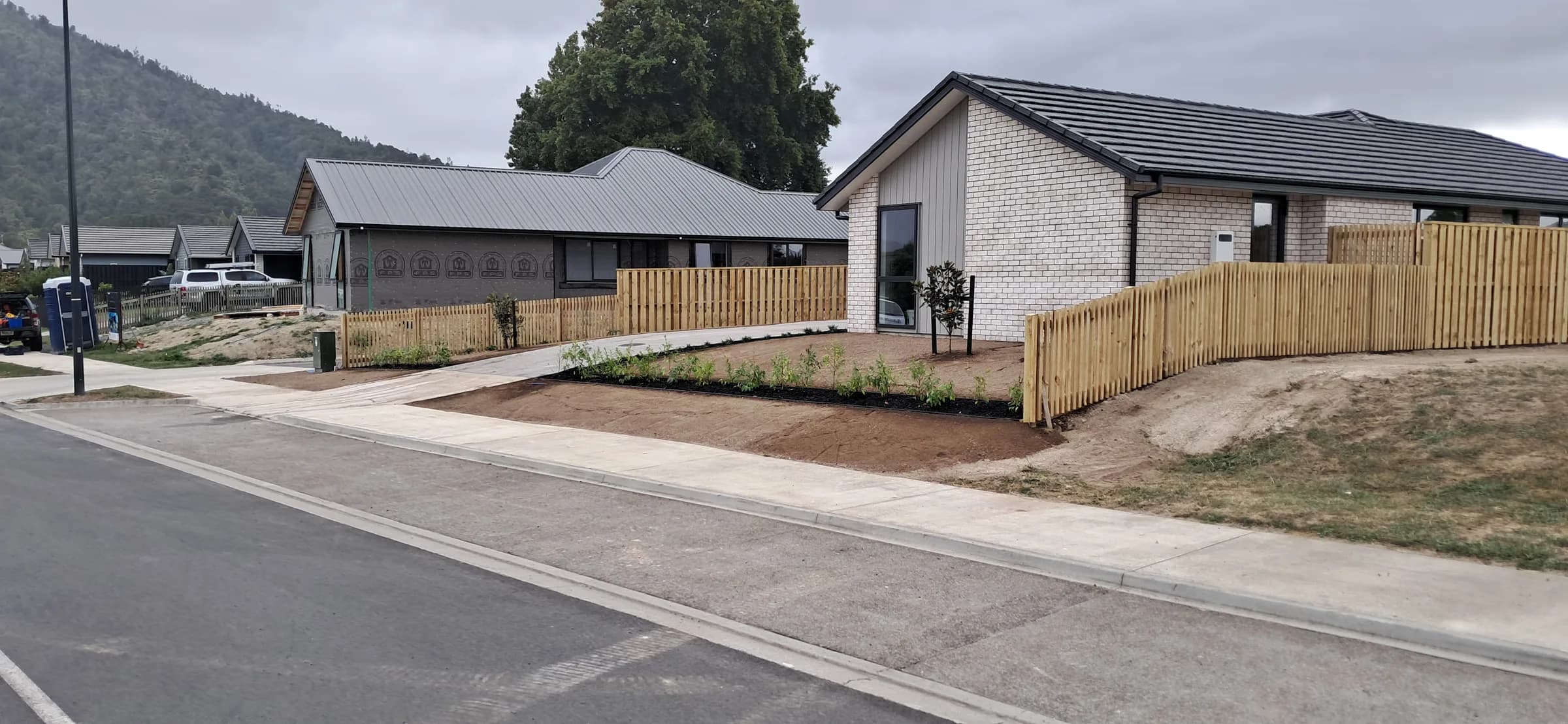
One fence, two properties, and legally, two people who are supposed to be paying for it.
Quick answer: under the Fencing Act 1978, neighbours split the cost of an “adequate” boundary fence 50/50 by default - but only once the right process is followed. Want something nicer than adequate, you cover the difference; skip the formal Fencing Notice and build first, you can’t bill your neighbour afterwards, even if the fence turns out perfectly reasonable.
Citizens Advice Bureau fields something like 6,000 neighbour disputes a year across fences, boundaries, trees and driveways - and fences are the single biggest category, ahead of everything else on that list. We build a lot of these fences across Hamilton and the Waikato, and “does my neighbour actually have to pay half” comes up on almost every boundary job before a single post goes in the ground.
The honest answer has more nuance than either “always 50/50” or “good luck getting anything out of them,” and most of the pages that rank for this topic pick one of those two and stop there. Here’s the whole thing, process included.
Who pays for what - the short version
Section 9 of the Act sets the default, and almost every fencing company website in the country manages to explain it in a way that makes it sound simpler than it is. It’s not complicated. It just has four actual outcomes, not one.
| Situation | Who pays |
|---|---|
| A standard, adequate fence | 50/50, split evenly between both occupiers |
| You want something nicer than adequate | You pay the gap between adequate and what you chose |
| One neighbour damaged the fence | They pay the full repair cost, not half |
| A written or verbal agreement exists saying otherwise | Whatever that agreement says, overrides the default |
There’s also no general legal duty to have a fence at all. If you and your neighbour are both genuinely fine with an open boundary, or a scraggy hedge doing the job, nobody can force the issue. The Fencing Act only switches on once somebody actually wants a fence built, repaired or replaced - and even then, only on the boundary itself, per Consumer NZ.
The line almost nobody quotes correctly: your neighbour never has to pay more than half of an adequate fence, full stop. Want aluminium slats instead of the timber paling that would’ve done the job? Gorgeous choice. Also entirely your bill for the difference.
What actually counts as “adequate”
This is the word the entire Act hangs off, and it’s deliberately elastic. The Act’s own phrase: a fence that’s “reasonably satisfactory for the purpose that it serves or is intended to serve.” That sentence does a lot of quiet work.
One property lawyer put it more bluntly than the legislation ever would: adequate “doesn’t have a nice clean, crisp definition when you are talking about fences. It is very circumstantial,” per PlaceMakers’ own coverage of the point. Circumstances that genuinely move the bar, according to that same piece:
| What pushes adequacy up | Why it counts |
|---|---|
| Privacy | Increasingly argued as a real need, not a preference |
| Security | Higher fences deter more than a knee-high rail does |
| Child or pet safety | Near a busy road, low isn't good enough |
| Stock control | A lifestyle block needs a fence that actually holds animals |
| State of repair | A damaged fence generally fails the test outright, whatever it's made of |
The Act even has a specimen spec buried in Schedule 2 - a paling fence has to be at least 1m high, on posts with two rails, gaps no wider than 100mm between palings. It’s not glamorous, but it’s the closest thing to a legal ruler anyone gets.
So: can your neighbour insist on patching the cheapest possible option if the fence is genuinely falling over? No - if it’s not adequate, it’s not adequate, regardless of budget. Can you force an upgrade on a fence that’s already doing its job? Also no.
Adequate isn’t a compliment. It’s a pass mark, and a pass mark is exactly what your neighbour is legally required to fund half of.
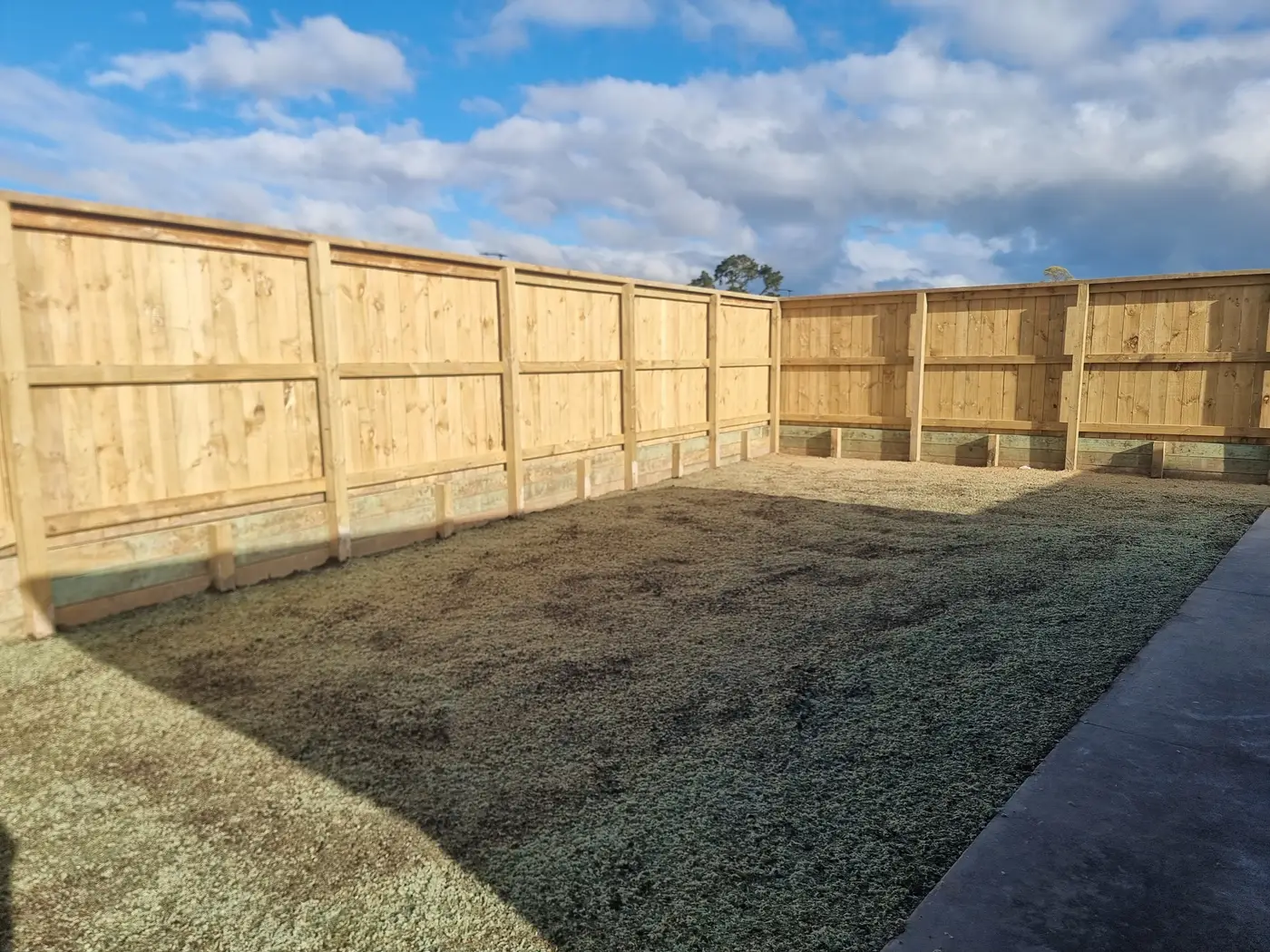
A standard timber paling fence - the kind that quietly clears the “adequate” bar without anyone having to argue about it.
The Fencing Notice - how you actually start this
Every source on this topic, legal or not, opens with the exact same advice: talk to your neighbour first. Not because the law requires it, but because the formal version of this conversation involves a document, a 21-day countdown and the faint possibility of a referee - considerably less fun than leaning on a fence you don’t technically own yet and just asking.
If an informal chat doesn’t settle it, the formal process is a specific document, not a strongly worded text message. A Fencing Notice needs, per Hesketh Henry’s breakdown of the Act:
| What the notice has to include | Why |
|---|---|
| Both parties' names and addresses | So it's actually enforceable, not just a note in a letterbox |
| The boundary and the proposed fence's specs | Material, height, design, construction method |
| A cost estimate, ideally a real quote | Vague numbers invite disputes over the number itself |
| How the cost will be split | Usually 50/50, unless something above already changes that |
| A proposed start date | Starting before the notice period ends voids the claim - see below |
From there, the neighbour has 21 days. Two things can happen, and only one of them favours the person sitting on the notice doing nothing.
Option one: they do nothing for 21 days. Under the Act, silence is treated as agreement - not as a safe way to make the problem disappear. Option two: they serve a cross-notice, setting out exactly what they disagree with - the cost, the fence type, the timing, or a claim that the existing fence is already adequate. That opens negotiation, and if the two of you still can’t agree, it’s off to the Disputes Tribunal or District Court.
You cannot build first and bill later
This is the single most expensive misunderstanding on this whole topic, and it goes exactly the direction you’d guess: badly, for the person who skipped the paperwork.
In one reported Disputes Tribunal case, someone built a new fence without ever serving a Fencing Notice, then tried to claim half the cost from their neighbour afterwards. Dismissed - not because the fence was unreasonable, but because there was never a valid notice, so there was never a valid obligation. The fence could have been architecturally perfect and it wouldn’t have mattered. Paperwork first, posts second.
A few more of the myths that get repeated as fact, corrected in one line each:
| The myth | The actual rule |
|---|---|
| It's always a strict 50/50, no exceptions | Only for an adequate fence, and only with a valid notice |
| I can build whatever I want on my land, no need to ask | True on your own land - but not if you want it on the boundary and want your neighbour to pay |
| Renters have to pay too | Only owners, or tenants on a lease over 10 years |
| Ignoring the notice protects me | Silence for 21 days is treated as agreement |
When it actually goes to court
Most fence disputes never get anywhere near a courtroom, which is the correct outcome, since almost nobody wakes up dreaming of spending a Tuesday morning arguing about palings in front of a stranger. The ones that do go the distance tend to follow the same path, and the numbers on that path just changed.
As of 24 January 2026, the Disputes Tribunal’s claim limit doubled to $60,000, up from $30,000. Filing costs a modest fee on a sliding scale depending on the claim size, hearings are usually scheduled within about six weeks, and there’s no judge or lawyer in the room - a trained referee hears both sides and issues a decision that’s legally binding either way. It’s built to be done without a lawyer, which is most of the point.
| Disputes Tribunal | As of 24 January 2026 |
|---|---|
| Claim limit | $60,000 - doubled from $30,000 |
| Filing fee | A modest, sliding-scale fee depending on claim size |
| Typical timeframe | Hearing within about 6 weeks of filing |
| Who's in the room | A trained referee - no judge, no lawyer required |
And then there’s the other end of the scale, for context on how far “just a fence” can actually travel. In Wellington’s Roseneath, a resident built an 11-metre, 4-metre-high timber structure on his boundary, got it past the council by calling it a “children’s play structure” instead of a fence, and blocked his neighbours’ harbour view in the process. The Environment Court called the excuse “just a contrivance,” ordered the structure removed, and awarded the neighbours $72,500 toward legal costs that reportedly ran past $100,000 in total.
That’s not a Fencing Act cost-share case - it’s a resource-consent fight - but it’s the honest answer to “what’s the worst this can get.” Most boundary disputes are a $60,000-ceiling Tribunal hearing at the very outside. A rare few turn into a multi-year, six-figure war over a harbour view. Talk to your neighbour early. It really is cheaper.
Retaining walls, hedges and trees - different rules
Three things people assume the Fencing Act covers, that it mostly doesn’t - it turns out one piece of 1978 legislation can’t actually govern every plant, wall and structure a person might put between two houses, however much a homeowner mid-argument might wish it did.
| Structure | Actually governed by |
|---|---|
| A boundary fence | The Fencing Act 1978 |
| A retaining wall (structural only) | “Right of support” + Building Act consent rules |
| A retaining wall doubling as the fence | Can get pulled into the Fencing Act too |
| A hedge used as the boundary fence | The Fencing Act - same as a built fence |
| Trees, roots and branches | The Property Law Act, a different Act entirely |
Retaining walls generally sit outside the Act entirely - they’re governed by the “right of support” principle and their own Building Act consent rules instead (we’ve written the full version of that in our timber retaining wall guide). The one exception: a wall that’s also functioning as the actual boundary fence can get pulled into Fencing Act-style disputes anyway, because at that point it’s doing two jobs at once.
Hedges can legally BE the adequate fence, particularly on larger rural sections - the Act cares about function, not material. If a hedge is doing a fence’s job, the same 50/50 cost-sharing for planting, relocating or maintaining it applies exactly as it would to timber or metal.
Trees and roots crossing the boundary are a different piece of law altogether - the Property Law Act, not the Fencing Act - and the rules are genuinely murkier. You can generally trim what crosses onto your side, but you wear the cost of doing it. Light and view disputes get weighed case by case, with no strong pattern either way - which is exactly the kind of fight the Roseneath case above turned into.
What we actually see on the job
Most of our fencing quotes start with one person, not two. Somebody rings us, we measure up, we price the job - and only somewhere in that process does “does my neighbour have to chip in” come up out loud.
We’re not the ones who serve the Fencing Notice - that’s between you and your neighbour - but we’ll happily quote the job in a way that makes serving one easier: a real, itemised written estimate, not a verbal guess, because a proper cost estimate is one of the things the notice actually needs.
A surprising number of neighbour disputes we hear about aren’t really about money at all - they’re about style. One person wants the tall private paling fence, the other was perfectly content with the three-rail fence that’s been quietly falling over since 2019, and no clause in the Fencing Act has ever once talked two neighbours into agreeing on taste. We can’t settle that one for you. We can build whichever fence you both eventually, grudgingly land on.
The legal side of this is more forgiving than most people expect going in, and more procedural than most people expect coming out.
Talk first. Put it in writing if talking doesn’t work. Don’t build first and hope. The rest tends to sort itself out.
| The recap | Short answer |
|---|---|
| Default split | 50/50 for an adequate fence |
| Want nicer than adequate | You cover the difference |
| Build without a notice first | You can't claim the cost back afterwards |
| Neighbour goes silent for 21 days | Treated as agreement, not a free pass |
FAQ
Got the legal side sorted and need the actual fence built? See how we build fences in Hamilton from measure-up to finish, or get a free, no-obligation quote - a real written estimate, exactly the kind a Fencing Notice needs.